
The Short Answer
Get your garage door winter-ready by replacing worn weatherstripping, lubricating the moving parts, testing the balance, and checking your opener's battery backup — all before the first hard freeze locks everything in place. Do this in October or early November, while temperatures are still mild enough to work outside and before snow and road salt start taking their toll.
Why Wisconsin Winters Are Rough on Garage Doors
A garage door is one of the largest moving parts of your house, and it's also one of the most exposed. Around here, that means deep cold that stiffens metal springs and thickens old grease, snow and ice that pack into tracks and rollers, and road salt that gets tracked in on tires and eats away at hardware over months of exposure. None of this breaks a door overnight — it wears it down a little at a time until a cold snap finally exposes the weak point, usually on the coldest morning of the year when you least want to deal with it.
Start With the Seals
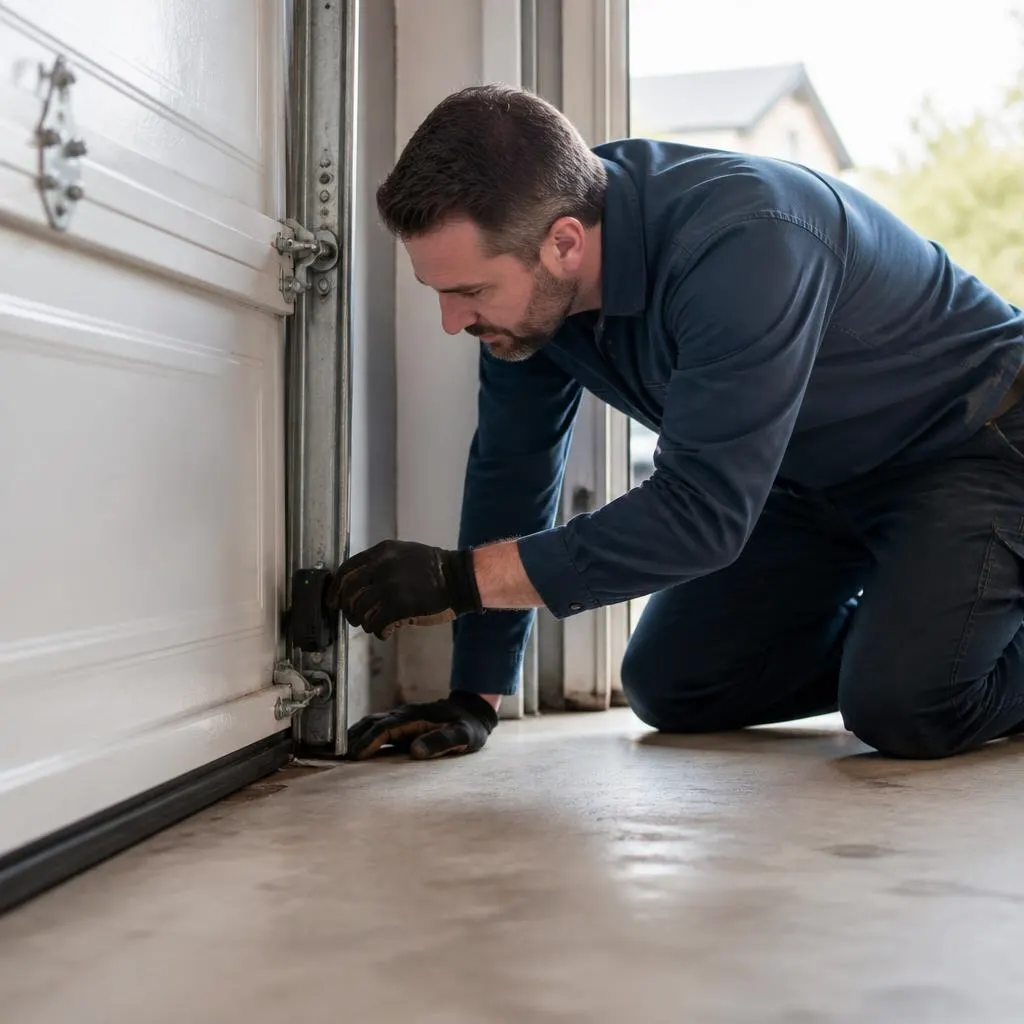
The weatherstripping along the bottom of the door and the sides of the frame is your first line of defense against cold air, snow, and mud tracked in from the driveway. Over a summer of UV exposure and a winter of ice, this rubber cracks, flattens, or pulls away from the track.
- Check the bottom seal for gaps you can see daylight through, or spots where it's gone stiff and brittle.
- Look at the side and top seals (if your door has them) for the same cracking and separation.
- Replace anything compromised now — a new seal costs little compared to the heating bill from a door that leaks cold air all winter, and compared to the damage from snowmelt seeping under a cracked seal and refreezing.
Lubricate Before the Grease Thickens
Cold makes standard grease and old lubricant stiff and gummy, which forces the opener motor to work harder and puts extra strain on the springs. A light coat of garage-door-specific lubricant (not WD-40, which is a solvent, not a lubricant) on the hinges, rollers, and tracks keeps things moving smoothly even when it's below freezing.
- Wipe down tracks and rollers first to remove summer's accumulated dust and grit.
- Apply lubricant to hinges, rollers, and the springs themselves.
- Avoid spraying lubricant directly onto the opener's drive chain or belt unless the manufacturer specifically calls for it — check your owner's manual.
Test the Balance
A garage door should move smoothly on its own once disconnected from the opener. Cold temperatures make springs contract slightly, which can shift a door that was previously balanced into a state where it's now too heavy for the opener to lift safely.
- Close the door and pull the manual release cord to disconnect the opener.
- Lift the door by hand halfway and let go.
- A balanced door stays roughly in place. If it falls or shoots upward, the springs are no longer carrying their share of the weight correctly.
This isn't a DIY spring adjustment job — torsion springs are under enormous tension and are genuinely dangerous to adjust without the right tools and training. But knowing the door is out of balance before winter means you can get it corrected before the extra cold-weather strain turns a minor imbalance into a snapped spring on a Tuesday morning.
Check the Opener's Battery Backup
Winter storms knock out power, often right when you need to get the car in the garage ahead of an ice event. If your opener has a battery backup, test it now by unplugging the unit and confirming the door still opens and closes. If you don't have battery backup, it's worth considering before the first major storm of the season, since a manual release during an ice storm means standing outside in the weather pulling a heavy door up by hand.
Clear the Tracks of Summer Debris
Leaves, dirt, and small pebbles that worked their way into the tracks over the summer can freeze in place once the temperature drops, creating rough spots that chew up rollers and strain the opener. A quick brush-out of the tracks before the first snow saves wear later.
Don't Forget the Gate
If your property has a driveway or security gate, the same cold-weather issues apply: hinges stiffen, sensors can get thrown off by ice buildup, and automatic openers draw more power in extreme cold. A quick inspection of gate hardware and lubrication points alongside your garage door prep keeps both systems running through the season.
When to Call Kenosha Garage & Gate
If your balance test shows a problem, if the door is noticeably harder to lift than it used to be, or if you spot visible rust or fraying on the springs or cables, that's the point to stop and call in a technician rather than keep testing it yourself. Our team handles spring replacement and full maintenance and tune-ups that cover lubrication, hardware tightening, and opener calibration in one visit — the kind of once-a-year service that catches small problems before the first deep freeze turns them into a door that won't open at all. We also handle opener repair and installation if battery backup or remote reliability is an issue going into winter.
If you're anywhere in Kenosha, Racine, Pleasant Prairie, Somers, Bristol, Salem, Twin Lakes, or Paddock Lake and want your garage door checked before winter sets in, give Kenosha Garage & Gate a call. A short visit now beats a cold, broken door later.